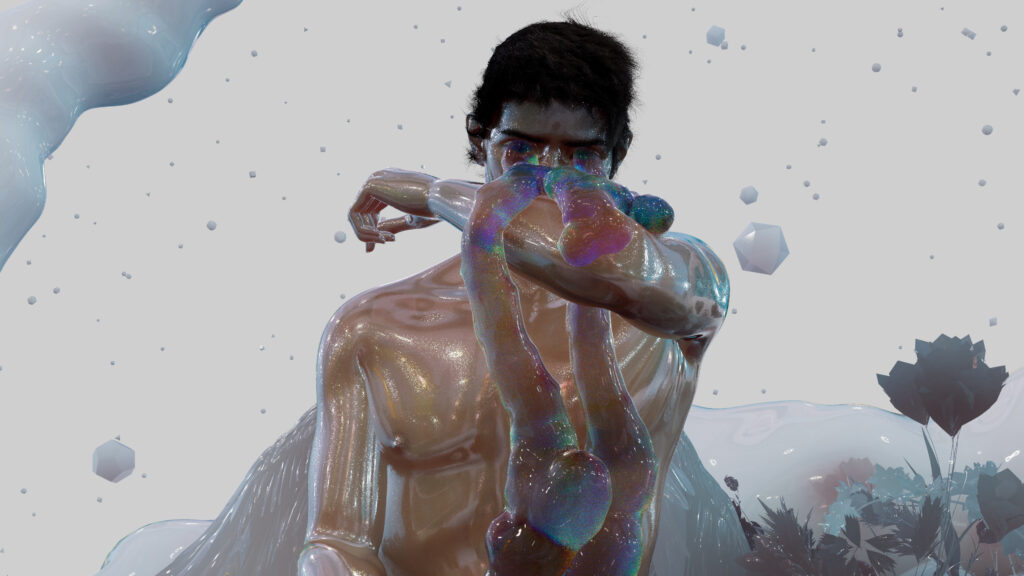
IT’S DANGEROUS TO GO ALONE! TAKE THIS is an ambitious 30-minute-long CGI film featuring ever-changing cinematic sequences from an imaginary video game which follows the ambiguous “hero” undergoing numerous metamorphoses. Combining fantasy, erotica and body horror, the film unravels and challenges the amped-up constructed masculinity that video game avatars embody as well as the associated idealistic connotations of progress, growth and transformation. Here external worlds merge with internal ones, the body’s selfhood untangles from surface and emotions flood in technicolour form.
The hyper-synthetic, glitched aesthetic is seductive yet unsettling, evoking the visual language of digital spaces and video game cutscenes where narrative is suspended between action and cinematic control. These environments, often dominated by the armoured male body, coded as hero, warrior, or survivor, carry their own historical and ideological weight. They promise agency and mastery, yet operate within tightly scripted systems, revealing a paradox at the heart of digital freedom, that the player appears powerful, but the world is already predetermined.
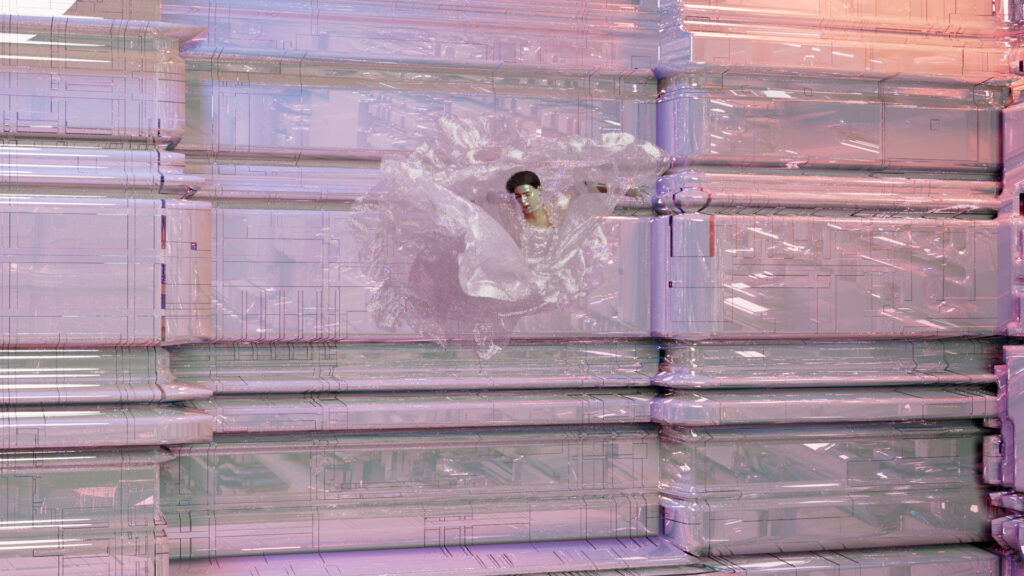

Across the film, scenes of destruction and decay collide with moments of resilience and rebirth, echoing the reset logic of the game world where collapse is never final and death is rarely permanent. However, rather than reproducing this structure, Al-Sabah destabilizes it. The glitch becomes more than an aesthetic flourish, it interrupts narrative coherence and exposes the constructed, politicized frameworks underpinning digital mythologies, particularly those that hyper-masculine, armoured embodiments as default protagonists.

By inverting the “logic” of computer-animated worlds, the film foregrounds their theoretical and historical contradictions. Digital spaces claim neutrality and innovation, yet they recycle familiar binaries: strength and vulnerability, hero and enemy, control and chaos. In disrupting these codes, the film opens a speculative space where identity is less fixed and less armoured. This world becomes not an escape from reality, but a lens through which to interrogate how the digital and the real continually shape one another, inviting viewers to imagine forms of embodiment and agency beyond the rigid scripts of the game.